What Does a Tutor/Mentor Learning Network Look Like?
Aggregating ideas, sharing with others, building a network

The graphic below is part of a visual essay created many years ago to help people understand the work being done by the Tutor/Mentor Connection (1993-present), which I now lead through the Tutor/Mentor Institute, LLC (2011-present).
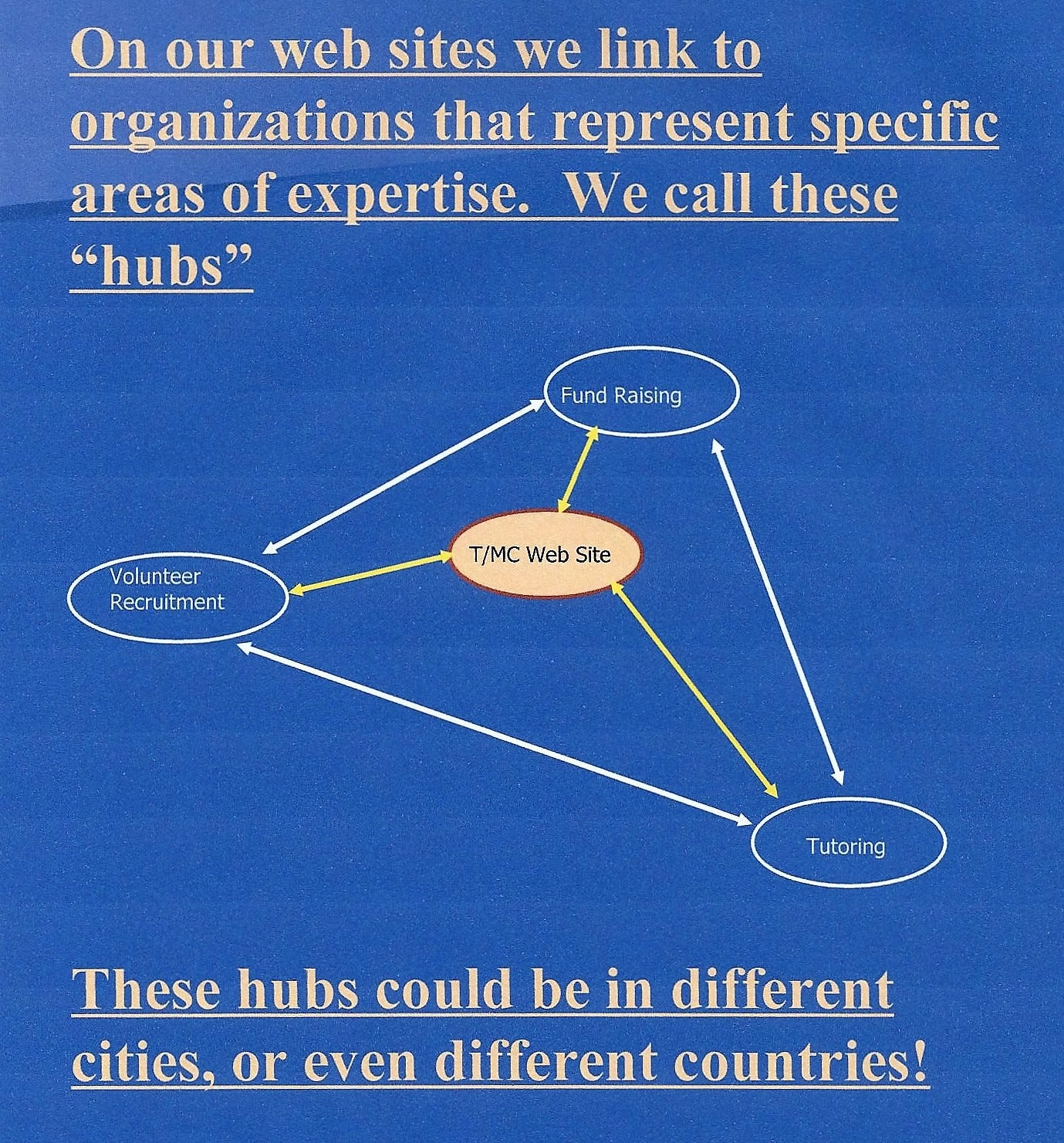
I wrote, “my goal is not to have links to "everything" on my website, but to point to other websites who aggregate information about specific topics, or specific groups of organizations.”
The goal is that people “Learn from what others are already doing rather than start over from scratch.”
Below are a few slides from two related visual essays that show this idea in greater detail.
The first shows why I created the Tutor/Mentor Connection in 1993 and what it’s trying to do.
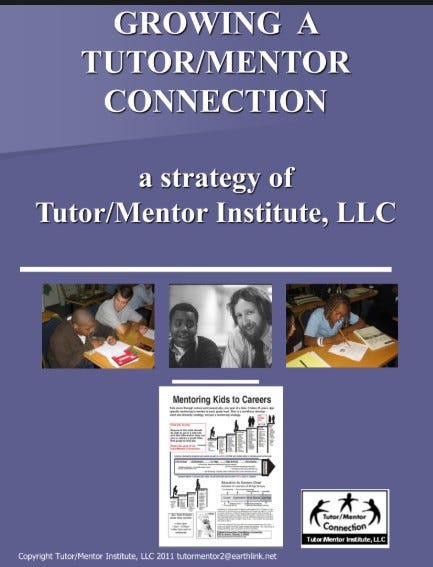
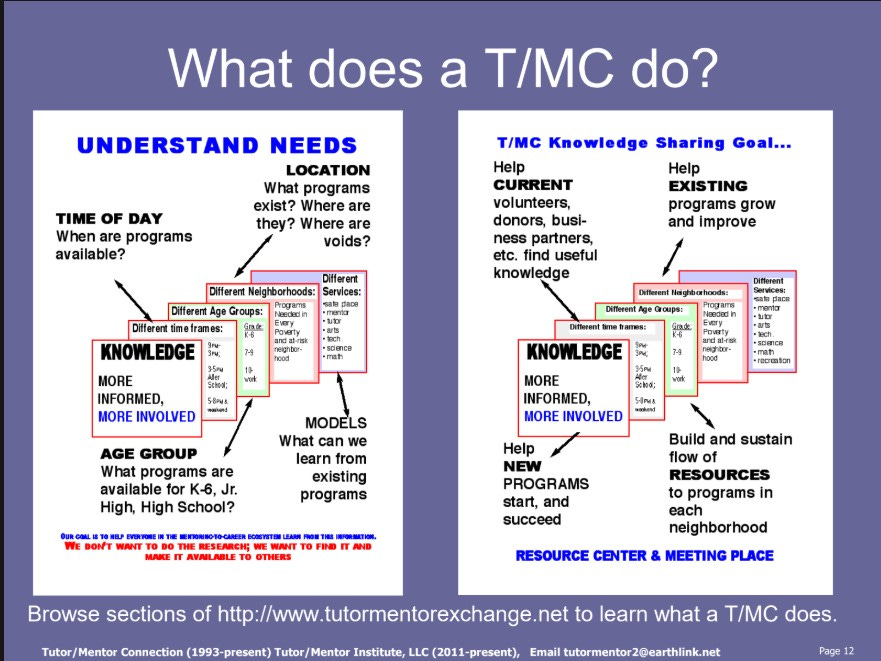
I wrote, “We seek to create a nationwide network of knowledge centers, each providing information that informs the actions of tutor/mentor program leaders, volunteers, donors and youth in every part of the world.”
I included these two graphics showing the type of information we were collecting and how we hoped the information would be used.
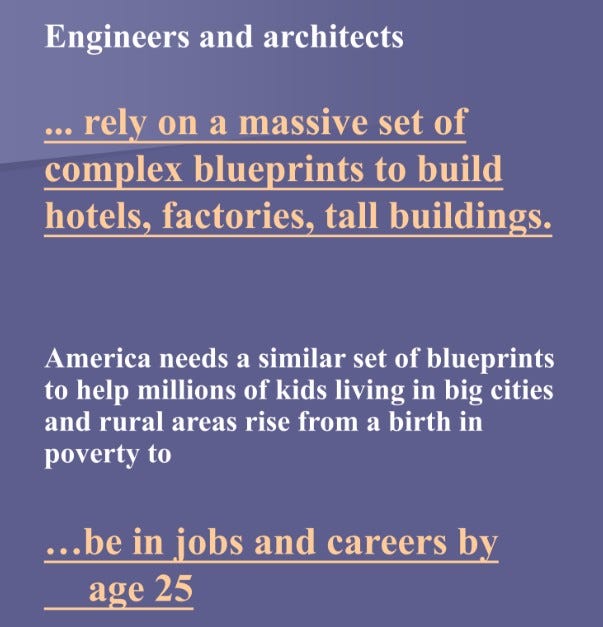
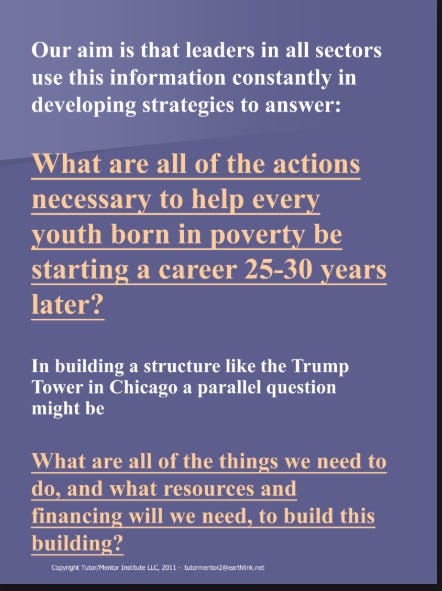
Then I compared the blueprints used by engineers and architects to those needed to build comprehensive, long-term support for kids in high poverty areas so they would be “in jobs and careers by age 25”.
Our aim is that leaders in all sectors use this information constantly.
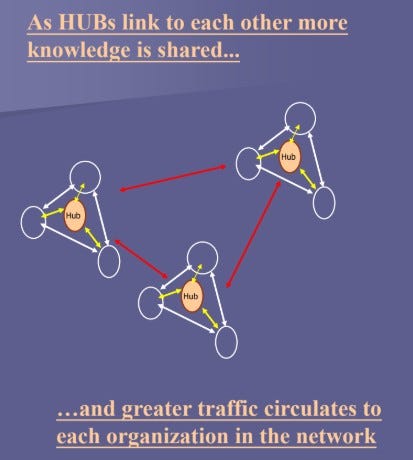
This is another view of the type of hubs we seek. As I find them I add them to the library on the Tutor/Mentor website. As these hubs link to each other they generate greater traffic through the entire network. Each organization benefits.
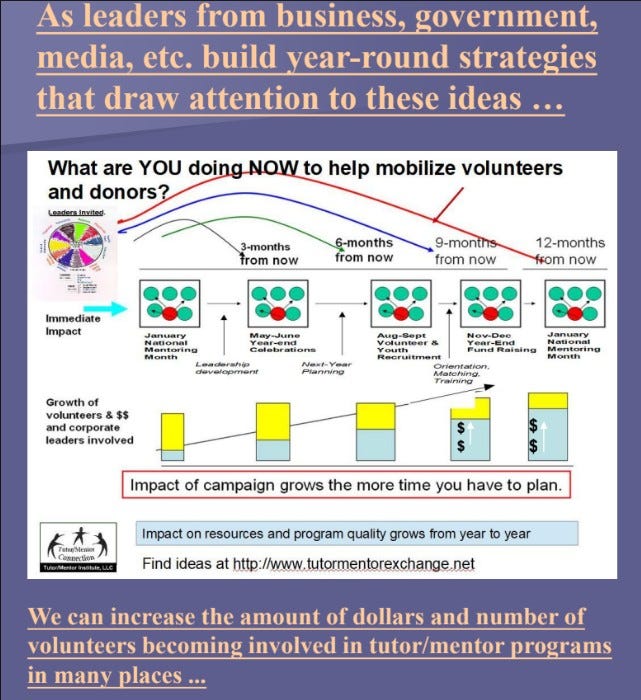
As leaders from business, government, media, etc. build year-round strategies that draw attention to these ideas we can increase the amount of dollars and number of volunteers becoming involved in tutor/mentor programs in many places.
View the full essay at this link.
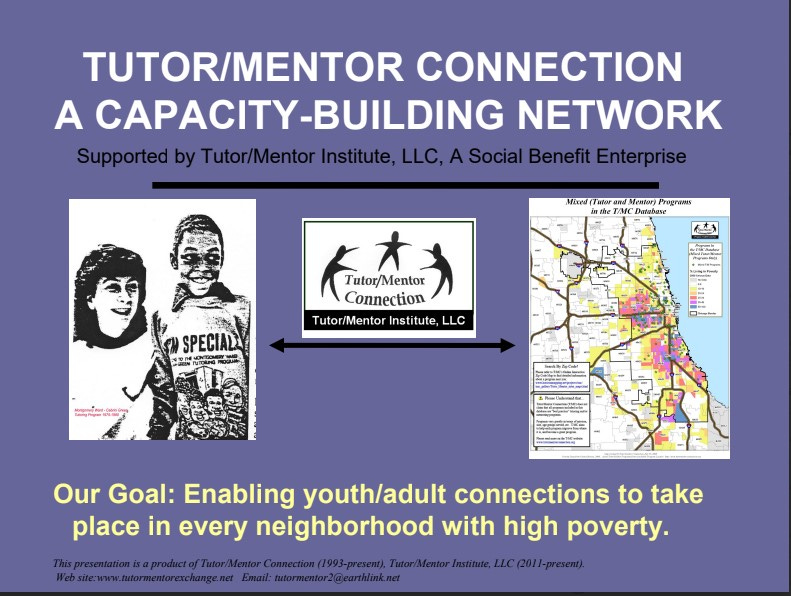
The second visual essay shows why and how the Tutor/Mentor Connection might be adopted by one or many universities. The goal: Enabling youth/adult connections to take place in every neighborhood with high poverty.
The slide below shows the front page of the Chicago Sun-Times in October 1992. It was the spark that led me to form the Tutor/Mentor Connection. It says “7-Year-Old’s Death at Cabrini Requires Action”.
Unfortunately after a while the media turned their attention to a different story. I’ve kept it as a reminder to keep trying, year-after-year. I share it at least once a year on my blog.
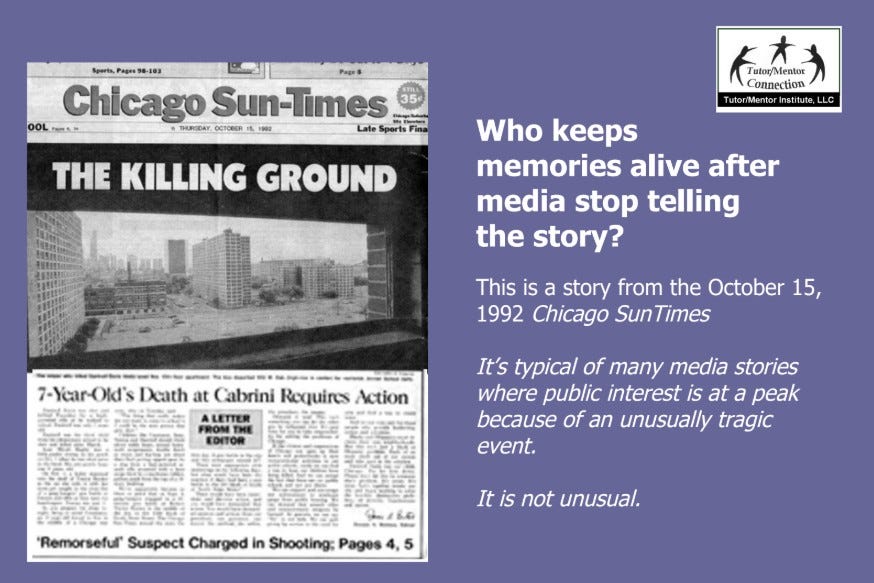
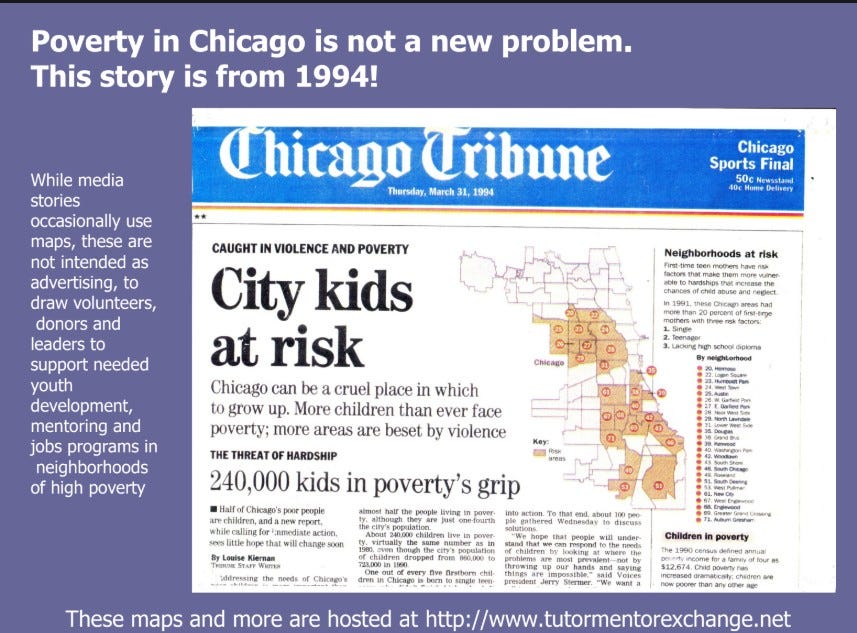
The map of Chicago has not changed much, in 30 years, even though the number of families now living in some of the high poverty areas has declined. There are still thousands of kids living in these areas who would benefit if a well-organized tutor/mentor program were available to them.
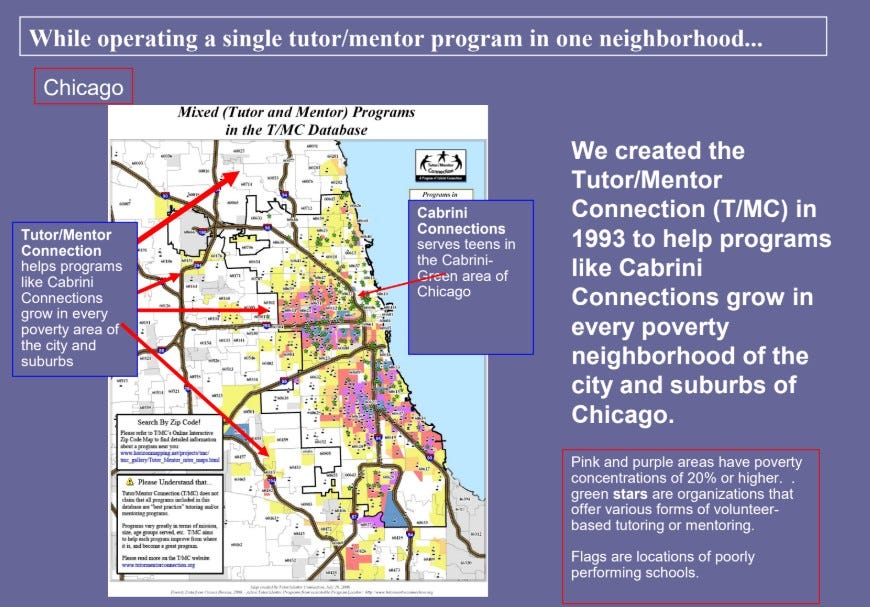
In late 1992 as we were forming the new Cabrini Connections program to help 7th and 8th graders living in the Cabrini-Green area move through high school we recognized that while one more small program might be life-changing to a few kids, it would not make a dent in the high poverty affecting many parts of Chicago.
So we created the Tutor/Mentor Connection at the same time as we were building our own program.
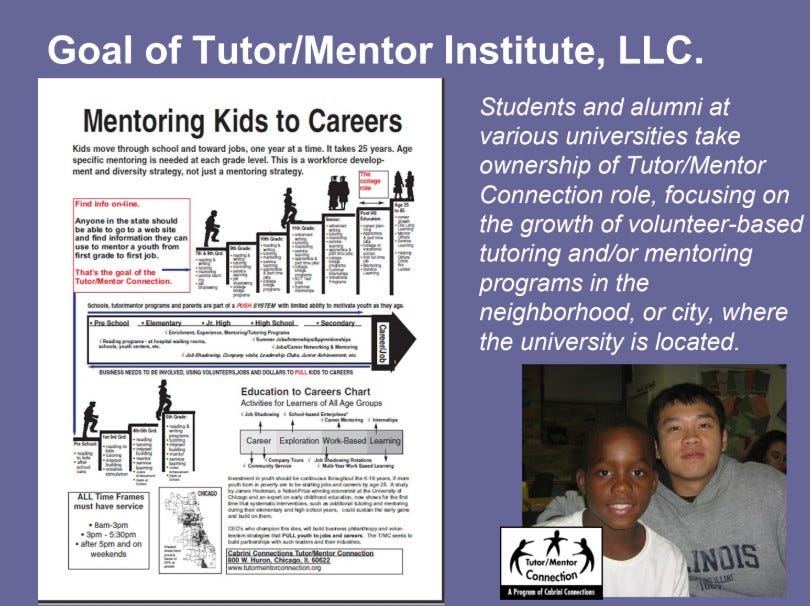
If you think of the stack of blueprints needed to build a tall building, they all start at the bottom, with some sort of financing, land acquisition, and digging of foundations. Then they build from the ground to the top.
This graphic visualizes the same sequence of actions for helping kids grow from birth-to-work, then through adult lives. Each neighborhood needs a range of programs that help kids and families, tailored to the age of each youth. This concept map visualizes this in a different way.
While many intermediaries collect and share information, I’ve found few who host a list of programs that do similar work, then constantly try to draw attention, volunteers and donors to EACH of these places. That’s what makes the Tutor/Mentor Connection unique, and difficult to understand.
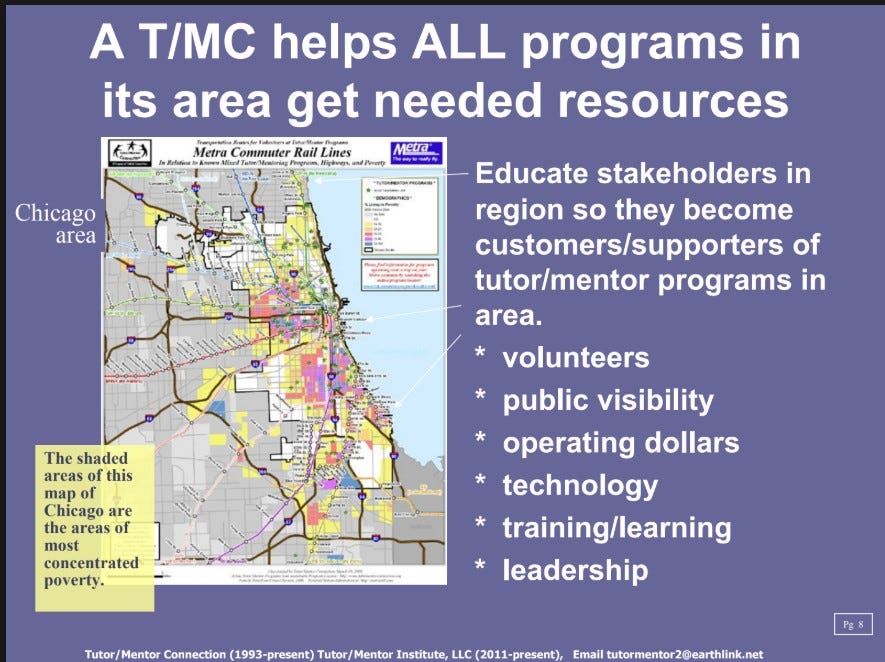
The focus of this essay and many articles on my blog has been to motivate universities to create on-campus Tutor/Mentor Connection-like programs, engaging students during their time on campus and supporting them through their adult lives. Take time to read some of these articles as you research this possibility.
While I’ve enjoyed working with interns from many universities, which I show in this article, I’ve not yet found any who take full ownership of the strategy.
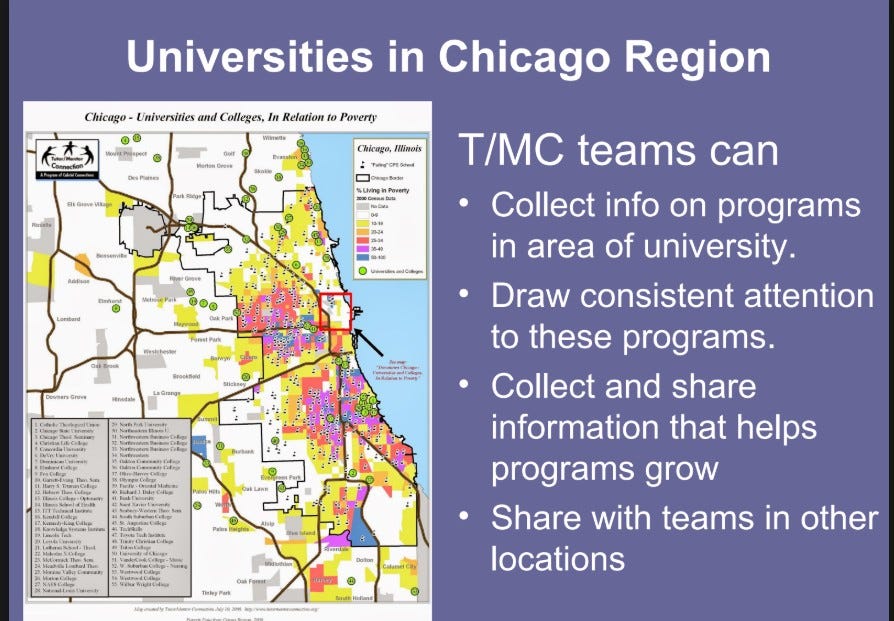
This slide shows just some of the on-going work students could be doing.
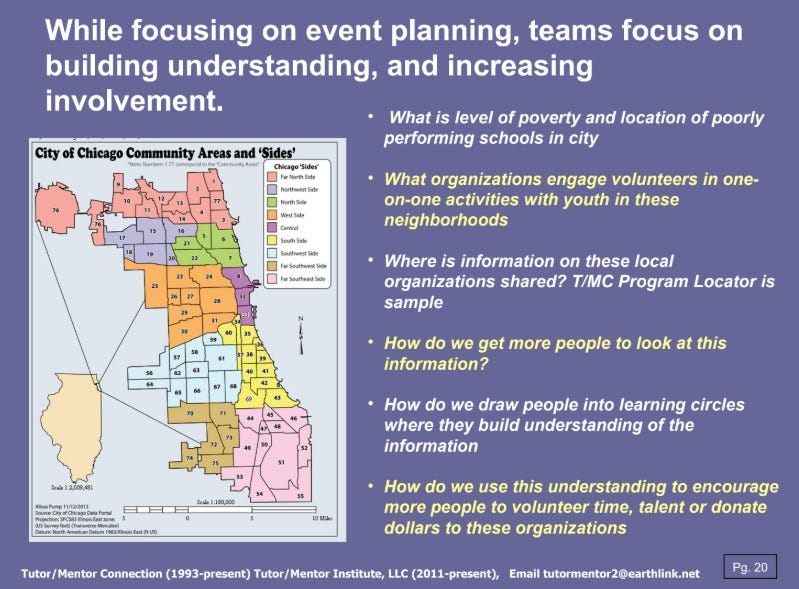
This slide shows that students learn new skills as they try to share these ideas. This article shows work interns did between 2006 and 2015.
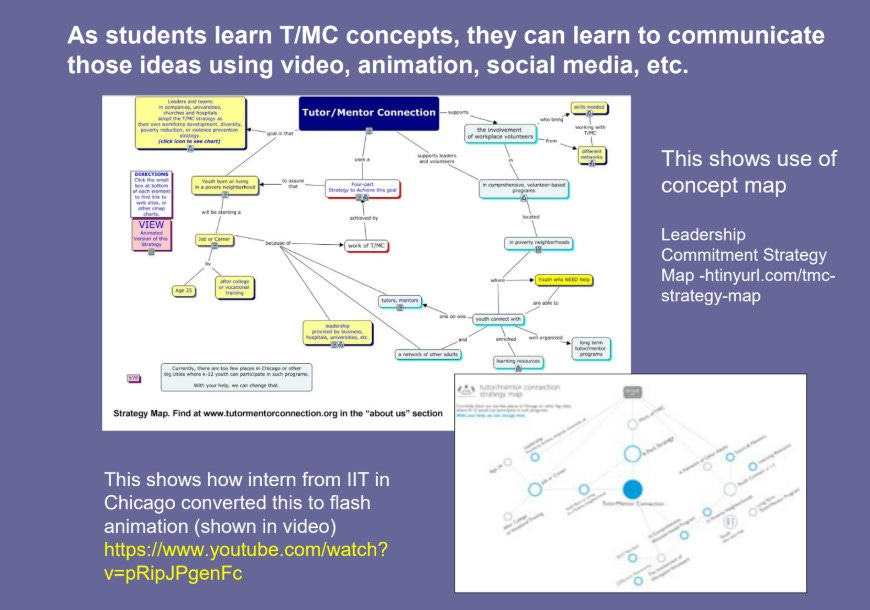
These are just a few of the slides in this visual essay. Click here to few the full presentation.
Read this article by Kevin Jones, which prompted me to write this post.
Follow posts, like this one, on LinkedIn by Daniel Max Crowley, who is calling for universities to do more.
As usual, I am pointing to a lot of information. Take time to read it. If you’re a student, perhaps this could become a research and/or independent study project.
I’ll look forward to connecting with you here and/or on LinkedIn and other social media sites.
I don’t charge a fee to use the resources I share, but there is a cost to me. Visit this page if you’d like to help me pay the bills.