
If you’ve read some of the articles I’ve posted over the last few weeks you’ll see that I’m asking business leaders and resource providers to be more consistent and strategic in what they do to help organized, volunteer-based tutor, mentor and learning programs reach K-12 youth in more of the high poverty areas of Chicago and other places.
Today I’m going to share a “Role of Leaders” strategy that I started using in the 1990s. You can view it in this PDF.
What is involved? What can a business leader do? Below are steps a leader can take.
Step 1 is to make a top-level commitment to support youth development, and volunteer-based tutoring and mentoring, as part of your organization’s diversity and workforce development strategy. If the CEO does not really believe in this strategy, there will be few followers willing to make the extra effort needed for truly innovative, long-lasting, work.
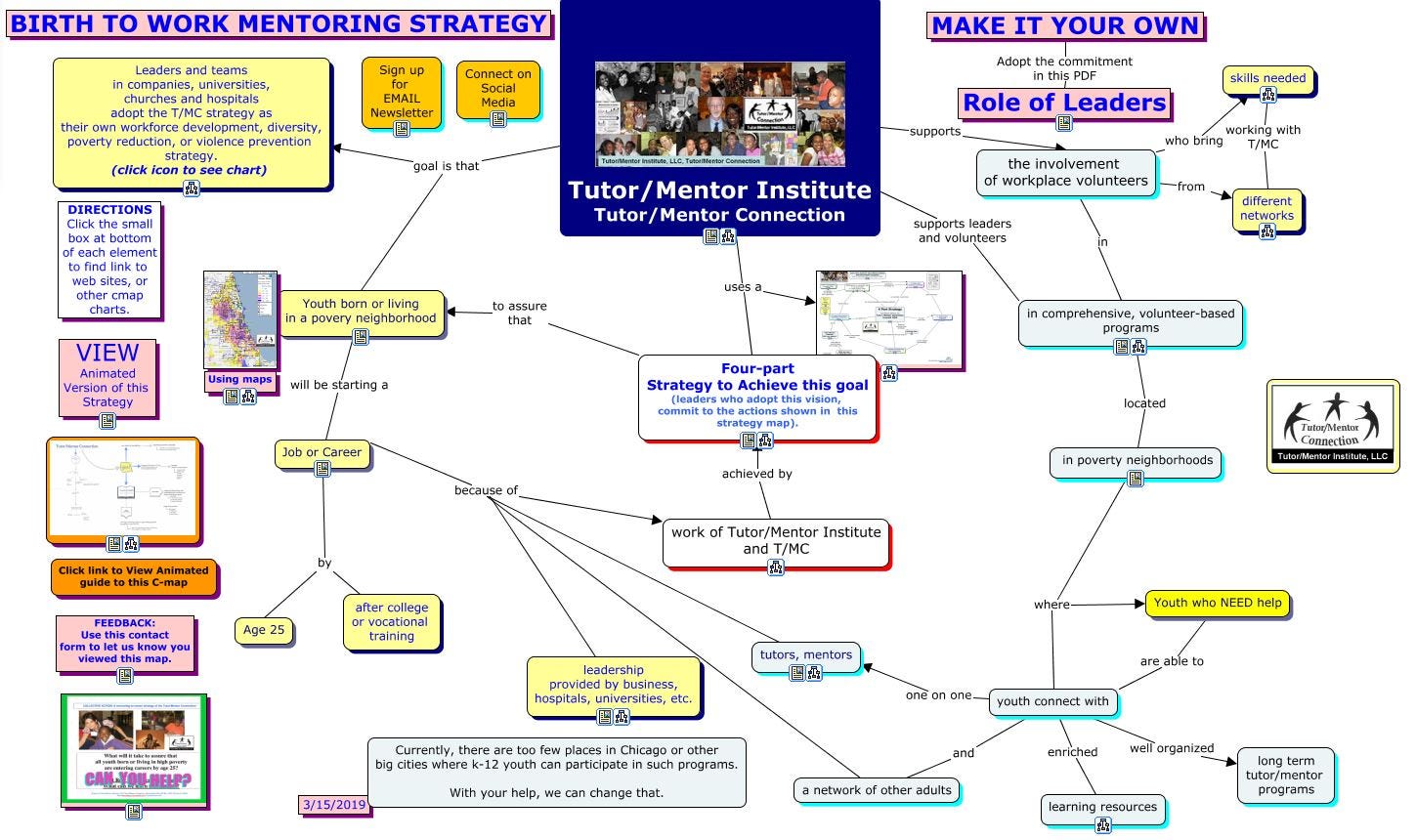
In this article I showed this concept map and asked leaders from every sector to put their own name/logo in the blue box at the top, to show their commitment.

Appoint a senior manager as the CEO’s personal representative. Recruit a leader from your organization’s marketing or strategic planning. Involve people who have responsibility for growing the company’s business. These are people who see opportunities where others see limits. These are people who always see a glass as “half full”.
These are people who will innovate new ways to engage the resources of your organization in workforce development strategies.

What are the needs? What is the organization doing now to meet these needs? What is the organization doing within a one-mile radius of its facilities, or where employees live?
Find out what the competition is doing. What are innovations that could boost company profits, morale, productivity while helping develop a future generation of productive workers and loyal customers? Link to Internet libraries where this information is available for all employees, not just your planning team.
Use maps in your planning
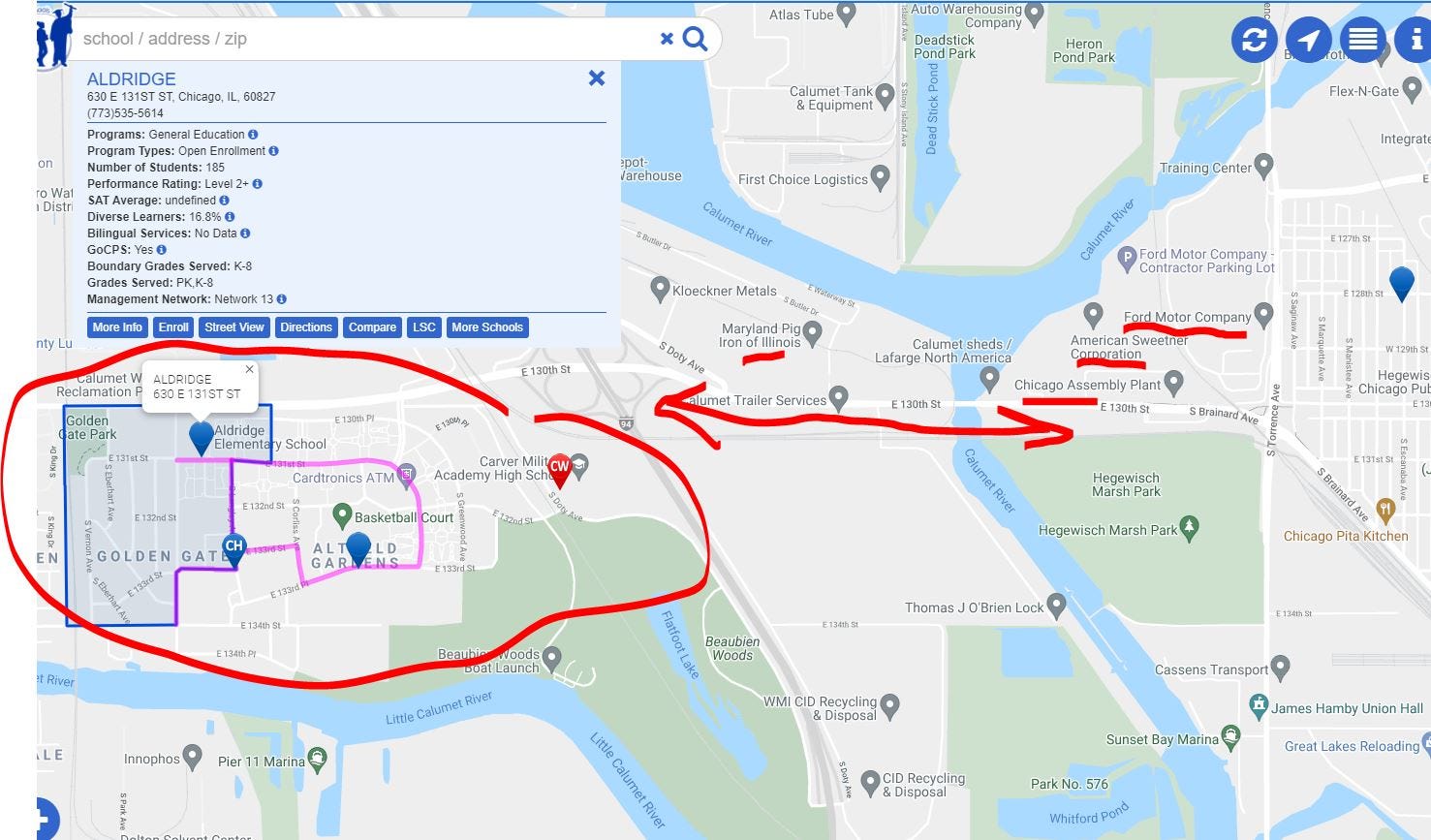
Plot locations of where you do business, or where you operate, then look for youth serving organizations in those areas that you can build long-term partnerships with. This is one of many articles posted since 2008 on my mapping blog, that shows the type of analysis planners should be making.
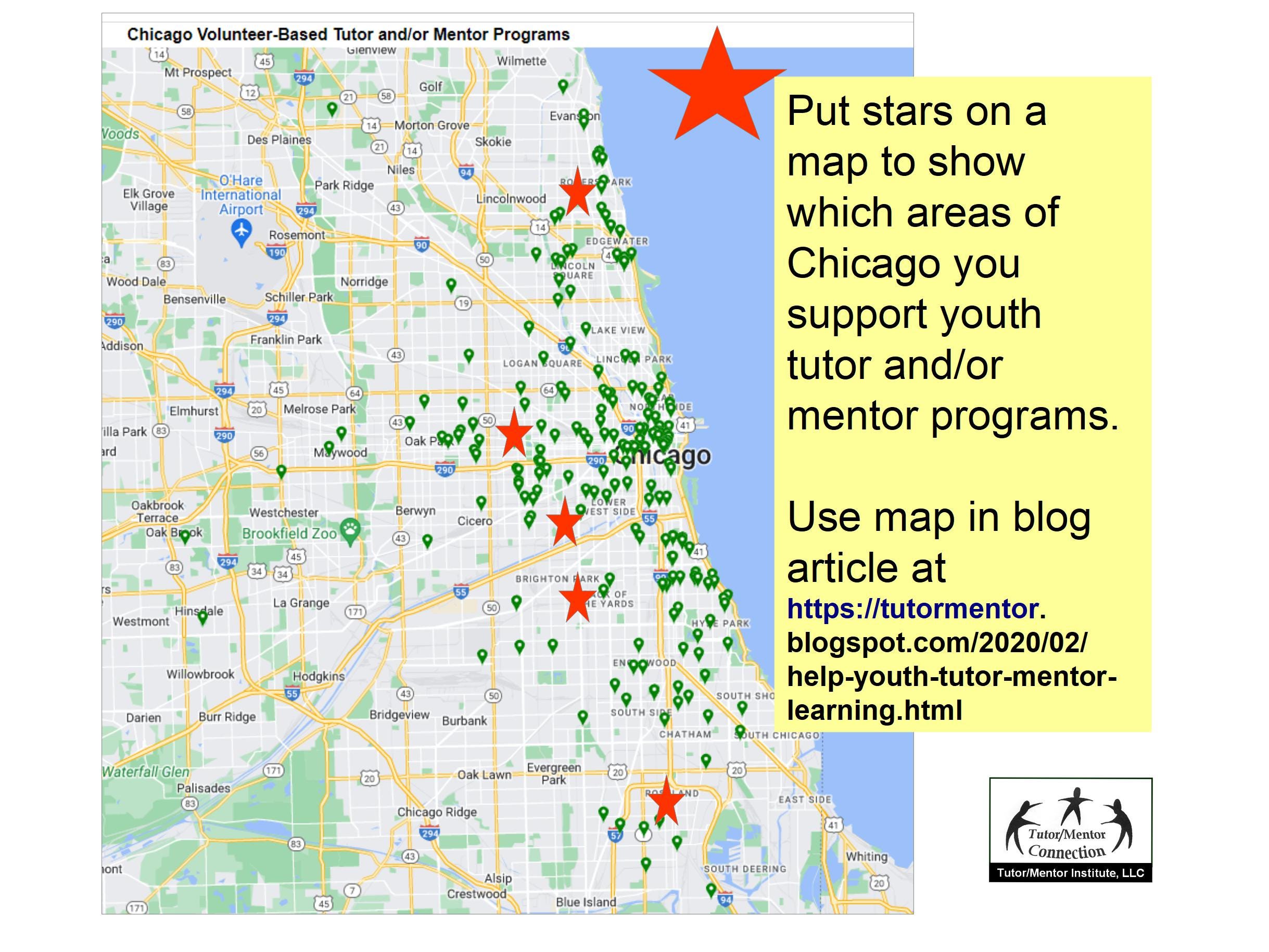
From 2004 to 2017 I hosted an on-line, searchable directory that could be used to find tutor/mentor programs or plan where to get involved. That’s now only available as an archive. However, I do still maintain a map that shows locations of tutor/mentor programs in my database. See it in this article.

Use company website, newsletter, social media, bulletin boards, advertising, in-store marketing, etc. to show why it is important to get involved in mentoring-to-career programs. Profile employees, customers, or friends/family members who are already involved with tutor/mentor programs. Build web links to tutor/mentor programs that already exist, or that already get funding from the company.
This leadership role seems the most difficult for organizations to take, yet it is the least expensive and has the highest impact.

Profiling volunteers and the programs where they volunteer not only recognizes volunteer involvement, but shares examples of effective practice and encourages others to volunteer, or provide financial support, to the same organization. Encourage the number of people involved to grow from year-to-year.

This encourages others to become involved. It also builds volunteers for your strategic planning team. Build a web page where employees can post information about the places where they volunteer and ask for help or share information. Companies with multiple locations in a city or across the nation can help workers develop informal relationships with each other. These can lead to greater worker productivity and can impact diversity goals within an organization.
When I created these steps in the 1990s I was just beginning to use the Internet to connect with peers from around the world. Now virtual collaboration is built into most organization. Has it extended to your support of social benefit organizations?

A CEO understands this. He/she encourages constant improvement in the enterprise. The CEO who asks for a review of the company’s progress and results on the above steps shows that his/her commitment is a priority. Each year as the CEO and members of the organization look back at results they will be amazed by the growth over a period of years in what they have accomplished.
Use your blog to document and share the progress of your organization in building knowledge, increasing public awareness, increasing employee involvement and the flow of resources to tutor/mentor programs near where your company operates, or where employees and their families live, or along the routes between employee’s home and workplace.
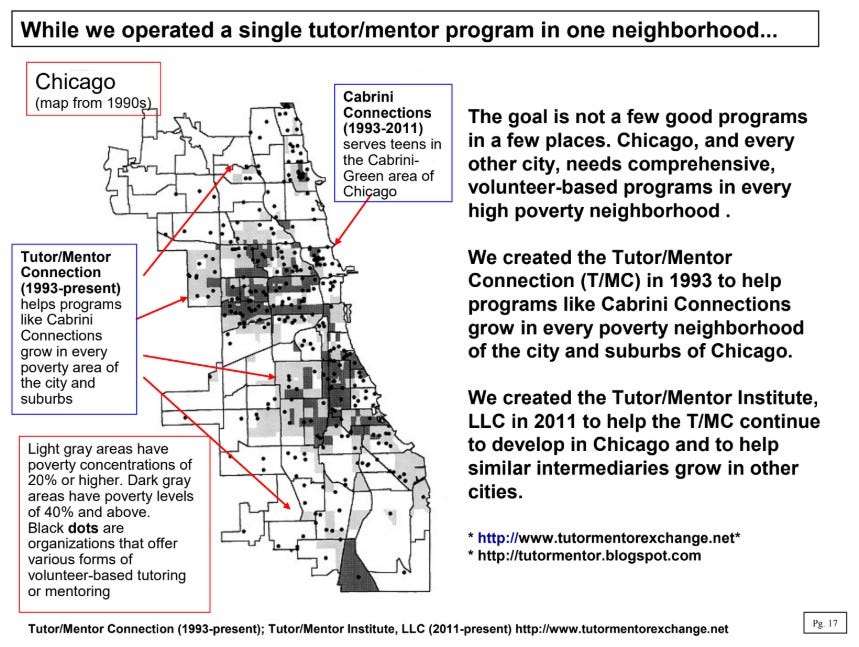
While I led a single tutor/mentor program near the Cabrini-Green area of Chicago, we created the Tutor/Mentor Connection to help similar programs grow in all high poverty areas of Chicago.
The goal is not a few good programs in a few places. Chicago, and every other city, needs comprehensive, volunteer-based programs in every high poverty neighborhood.
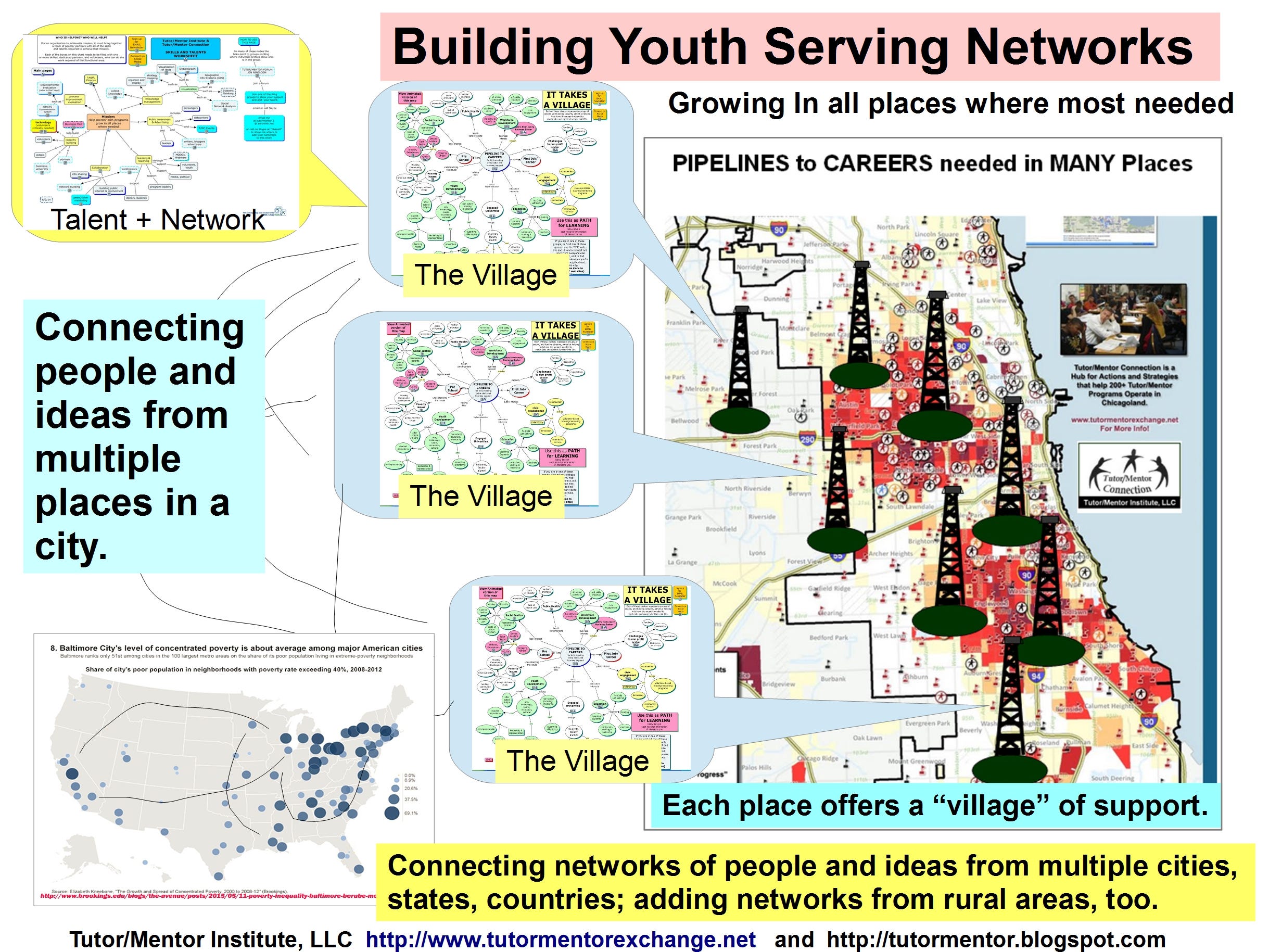
Teams of talented people are needed at every tutor/mentor program, in every neighborhood, in every city.
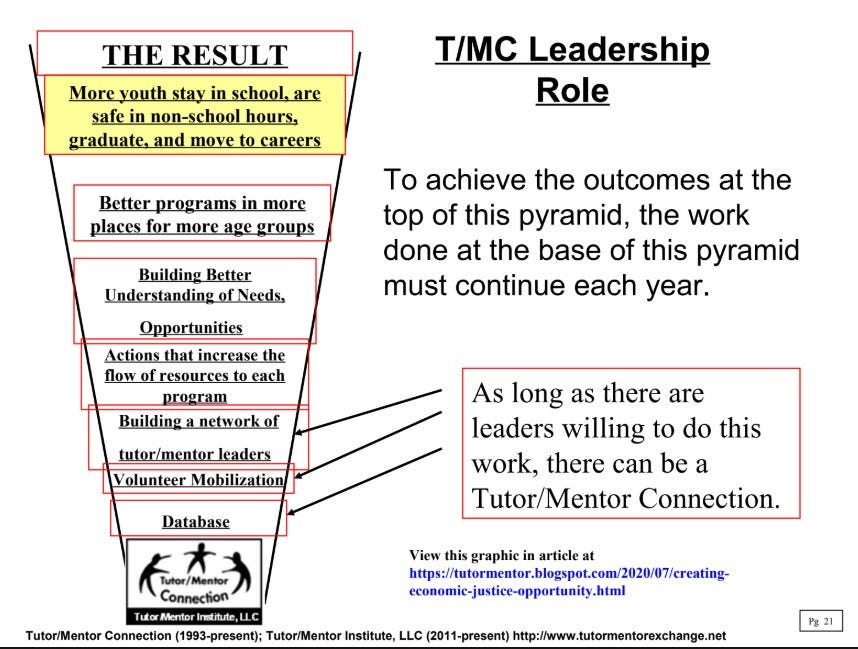
With your help this result is more possible
Learn more. View other Tutor/Mentor Connection (1993-present) and Tutor/Mentor Institute, LLC (2011-present) presentations on this page, and read articles posted since 2005 at http://tutormentor.blogspot.com
Read a few of these “Role of Leaders” articles on the Tutor/Mentor blog.
While there are many other challenges facing us, raising children to contribute fully to the future of the US and the world requires on-going effort in thousands of places and millions of homes. People in business, faith groups, professions, sports, entertainment, media and public policy can have a much more strategic role than they’ve taken in the past, just by adopting the steps shown above.
This does not mean “stop supporting programs you already support”. It means that you recognize other neighborhoods need similar programs and that people in your organization, or other organizations, might provide that aid.
Are you already doing this? Do you have a presentation showing your leadership steps. Does it include a map showing all the places you support? If yes, please share it. I can add your example to this section of the Tutor/Mentor library.
Thanks for reading, and, hopefully, sharing this.
Let’s connect on LinkedIn, Facebook, BlueSky, Twitter, etc. See links here.
And, if you’re able, visit this page and send a contribution to help me pay the bills!