No coding. Just a vision.
See how volunteers with technology skills have helped me over the past 30 years

I read this post by Gene Bellinger today, which has two stories that I can personally relate to. In the first there’s a line that says, “Elara didn’t know how to code the software or build the databases; she didn’t need to. She was the visionary, providing the spark and the ideas, while other built the digital dashboards that brought her visions to life.”
The second story included the line, “He didn’t touch a single line of code. He just poured out his ideas, and the builders translated his vision into simple, elegant, interactive visual stories.”
Below are examples of this in my own journey. The first is the 1998 homepage of the www.tutormentorconnection.org website. A local company led by the brother of one of my volunteers was the first to build a website for me. However, I was not able to easily edit it. Then another volunteer offered, “My company can build it for you”.
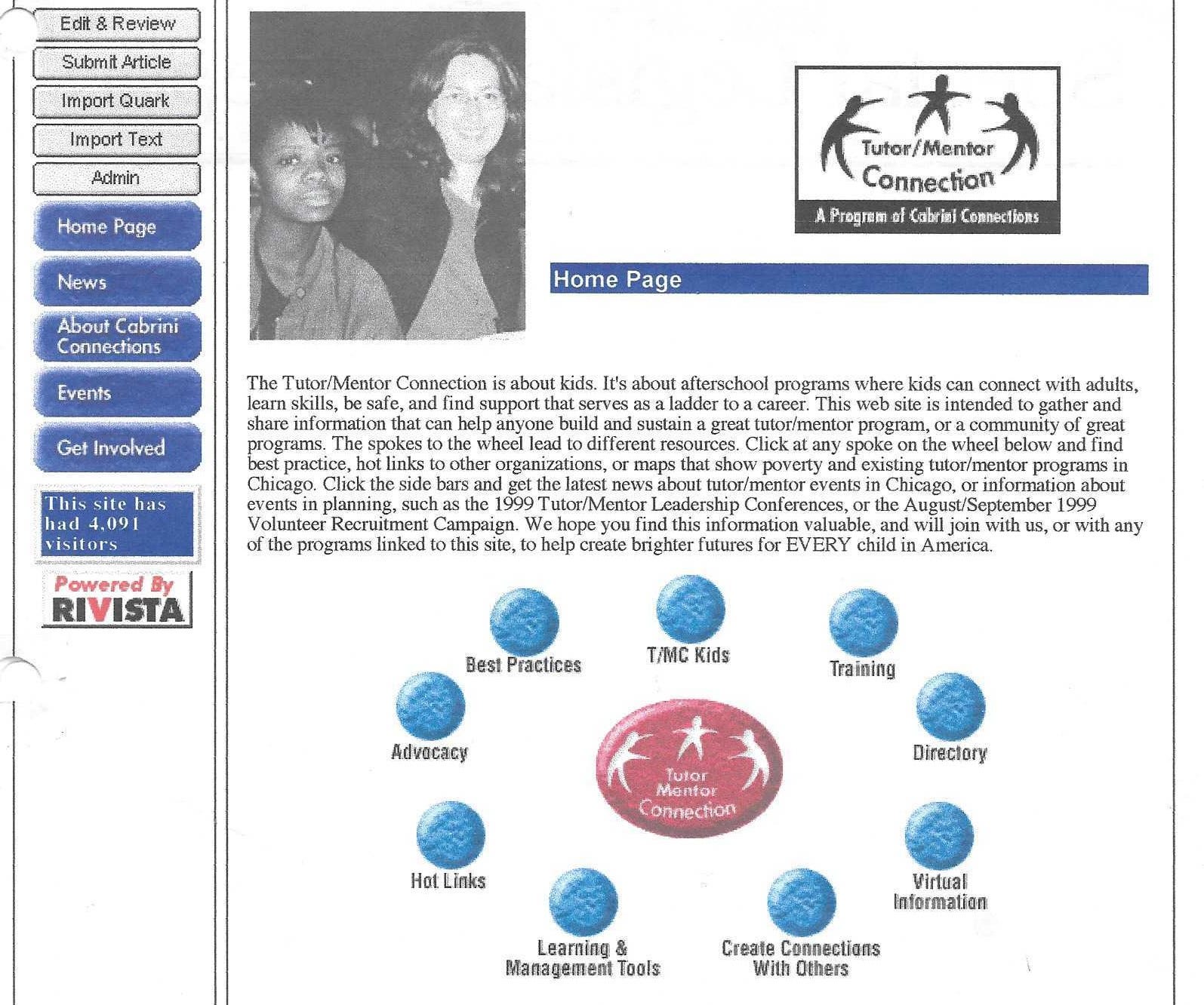
The hub and spoke graphic was a design that he created after many conversations. It shows how we were connecting many people and ideas via our site based tutor/mentor program, and our website library. This PDF shows the many pages within the site. What made it valuable to me was that it was easy for me to edit and add content. I did not need to know any coding.
My next example shows how Steve Roussos, a PhD student from the University of Kansas started coming to the Tutor/Mentor conference around 1998 and soon became one of my most trusted friends and advisors.
Steve built the www.tutormentorexchange.net site, which I still use, back in 1999. It was intended to support that year’s Tutor/Mentor Volunteer Recruitment Campaign, since the main T/MC site was not working. Once the main site was working again I used this site to share my PDF essays. When I formed the Tutor/Mentor Institute, LLC in 2011 I made this my primary website.
In 2000 Steve submitted a proposal for building an Organizational History and Tracking System (OHATS), based on work done at the University of Kansas to support the Youth Friends network.
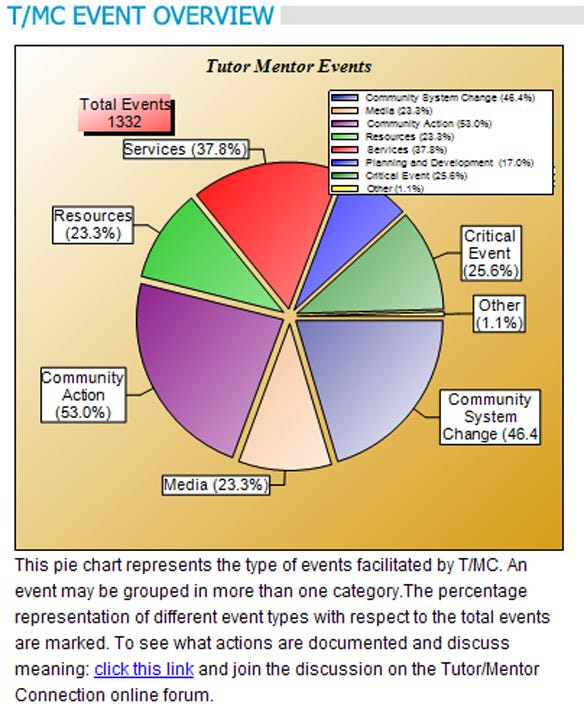
We identified actions that would lead to success of the Tutor/Mentor Connection, then Steve created an interactive site where people could document actions that they took and show what part of the T/MC strategy it affected. You can see pages from the 2001 OHATS in this blog article.
While several people documented actions in 2001-3 the site began to get spammed, and did not have any search features. Thus it was used less and less. Then, in 2006 a volunteer from India offered his time and talent, and the first project he worked on was to rebuild the OHATS that Steve first built in 2000. This page provides a comprehensive review of that version of OHATS.
In 2003-04 I received a community technology grant and was able to hire Vamshee Bhupathiraju, a graduate student from India who was attending the Illinois Institute of Technology. In 2004 he converted our list of Chicago area volunteer-based tutor/mentor programs from a printed directory that could only reach a few hundred users, to an on-line, interactive search page, which you can see below.
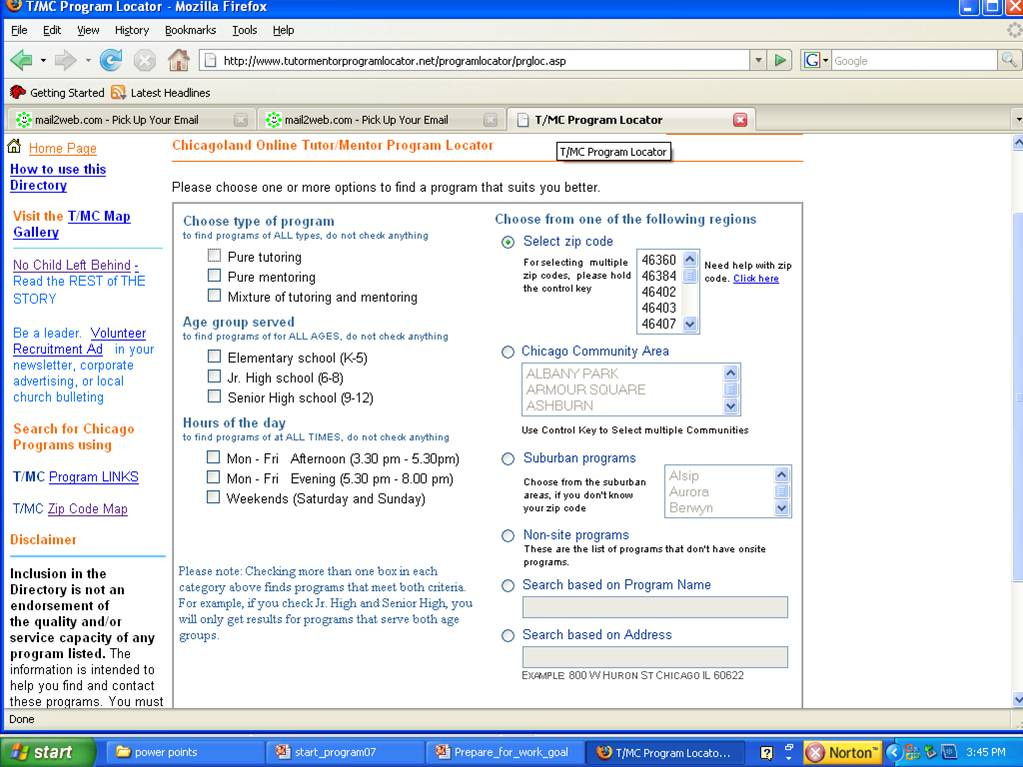
This PDF and this PDF were created to show users how to add and/or edit information on the program locator.
This site was built before Facebook and MySpace, yet Vamshee’s vision was that the site would support a community of users. It never reached that level of use, but made it much easier for T/MC staff to update program listings and to share information from our database, and for users to find programs for specific age groups in different zip codes.
In the early 2000s my interaction in on-line groups led me to connect with Jim Cory, a GIS expert living in Madison, Wisconsin. For several years he was my primary map maker. He also developed an early version of the interactive map-based program locator. It is still working, although not updated.
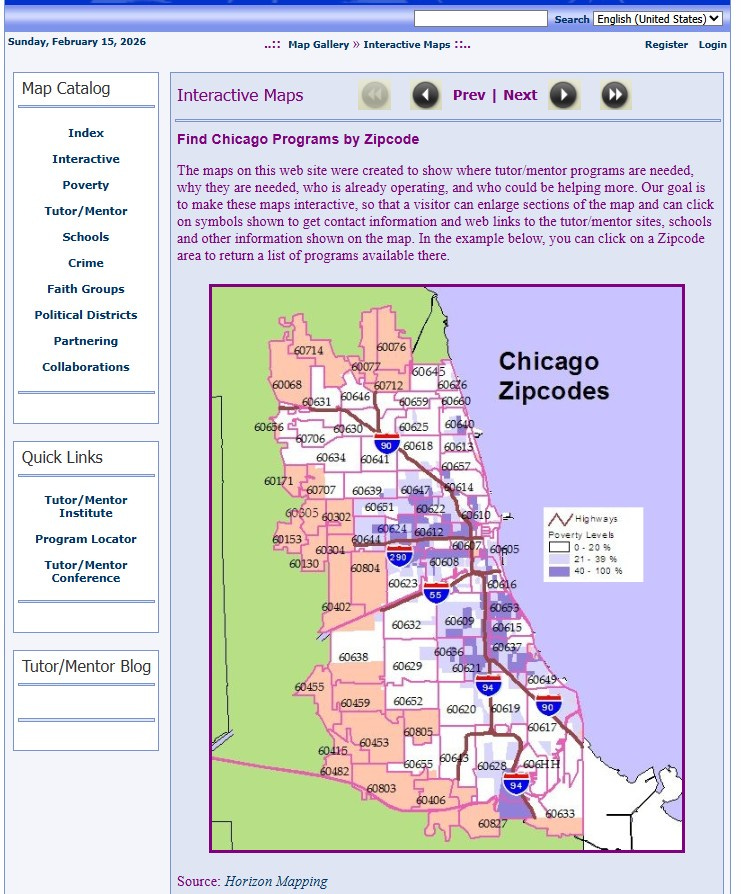
In late 2007 I received a $50,000 gift to help rebuild our mapping capacity. This enabled me to hire Mike Traken, who had expertise using the donated ARC GIS software from ESRI, that we had received since around 1996. Look at the 2008 to 2010 articles on the http://mappingforjustice.blogspot.com blog to see the many maps and stories that he created.
We used the second half of that grant to hire the team from India who had re-built OHATS to create an interactive map-based Program Locator, based on the maps Mike was creating and the work Vamshee and Jim Cory had done. Below you can see a close up view of one Chicago neighborhood that was created using the Program Locator. Browse this set of articles to see more examples.
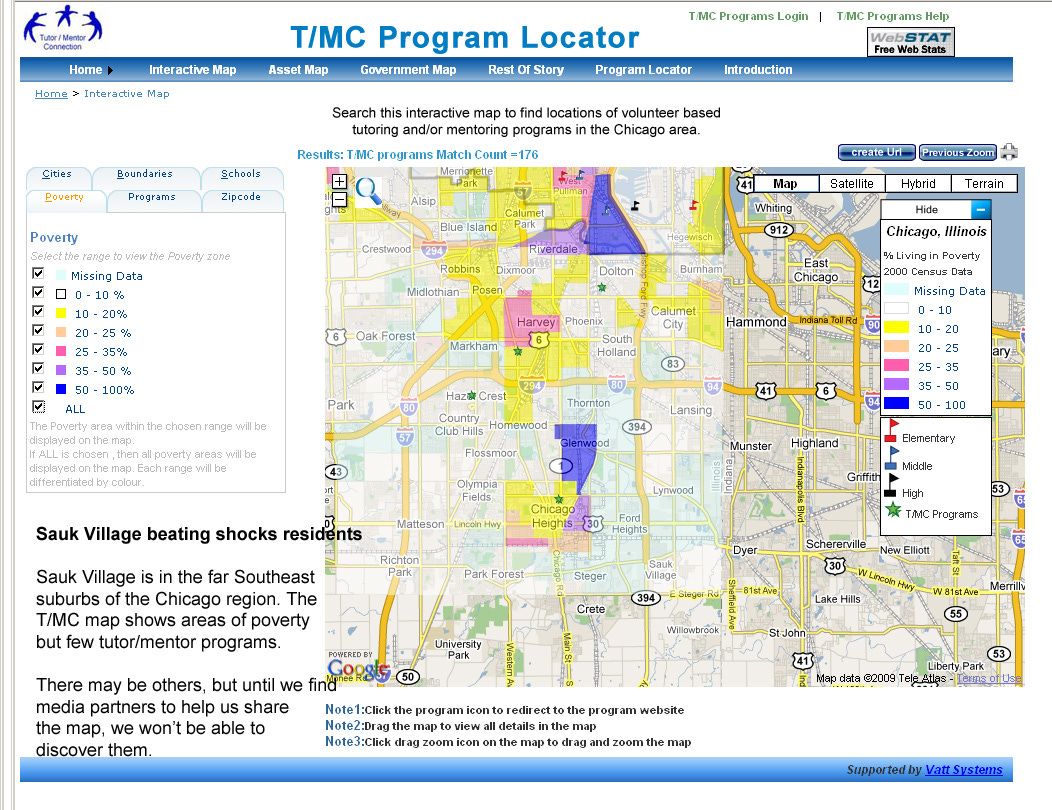
Browse this Program Locator 2015 - help needed PDF and you can see the many features that were built into this platform. Unfortunately the financial disaster that started in 2008 led to a loss of funding and an inability to continue updating the Program Locator, and eventually to eliminating Mike’s position.
So far I’ve not mentioned the role of the technology team at IUPUI. As part of an effort to duplicate the T/MC in Indianapolis they began to send people to our conferences. This led to eConferences hosted by IUPUI in 2004, 2005 and 2006. Then in 2006 they completely rebuilt the www.tutormentorconnection.org site and hosted it until around 2013. Nathan Byrer at IUPUI continued to maintain and host the site until 2018 when it finally had to be taken off line due to too much spam.
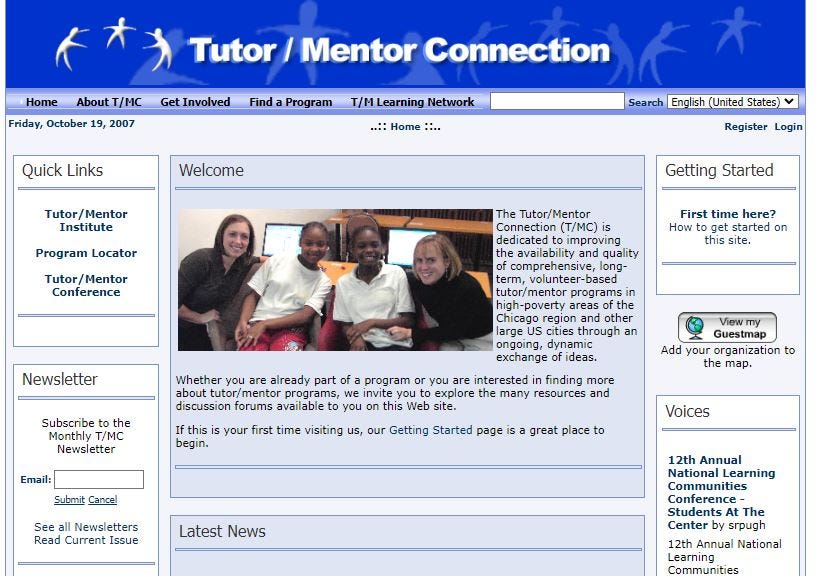
Since 2011 I’ve had a few volunteers help me with small fixes to the Program Locator, but due to lack of funds I’ve not been able to keep these resources updated, or on-line. I have continued to share the ‘vision’ but had had fewer responses.
Yet through 2015 I had continuous support from Interns from IIT, who spent six weeks in the spring and fall interpreting my vision via their own creations. This concept map shows some of their projects.
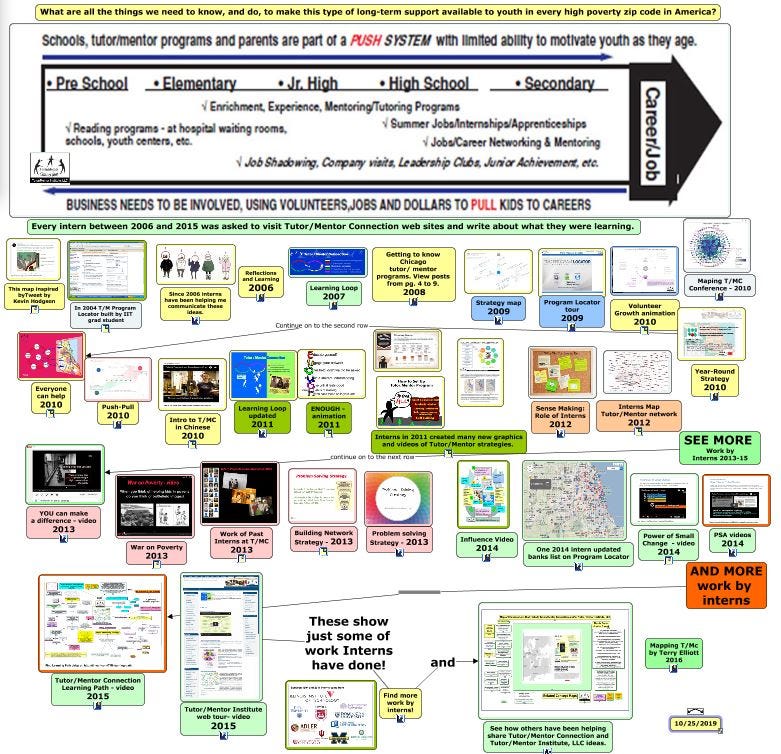
In 2014 a team of students from Indiana University looked at participation in the 1994 to 2014 Tutor/Mentor Conferences. Then in 2016 another map was created to show conference participation. Read about these in this article.
Most recently two teams from the Fall 2025 Information Visualizations MOOC (IVMOOC) at Indiana University looked at 1994-2014 Tutor/Mentor Leadership and Networking Conference data and created interactive projects that shared that data. One is shown below.
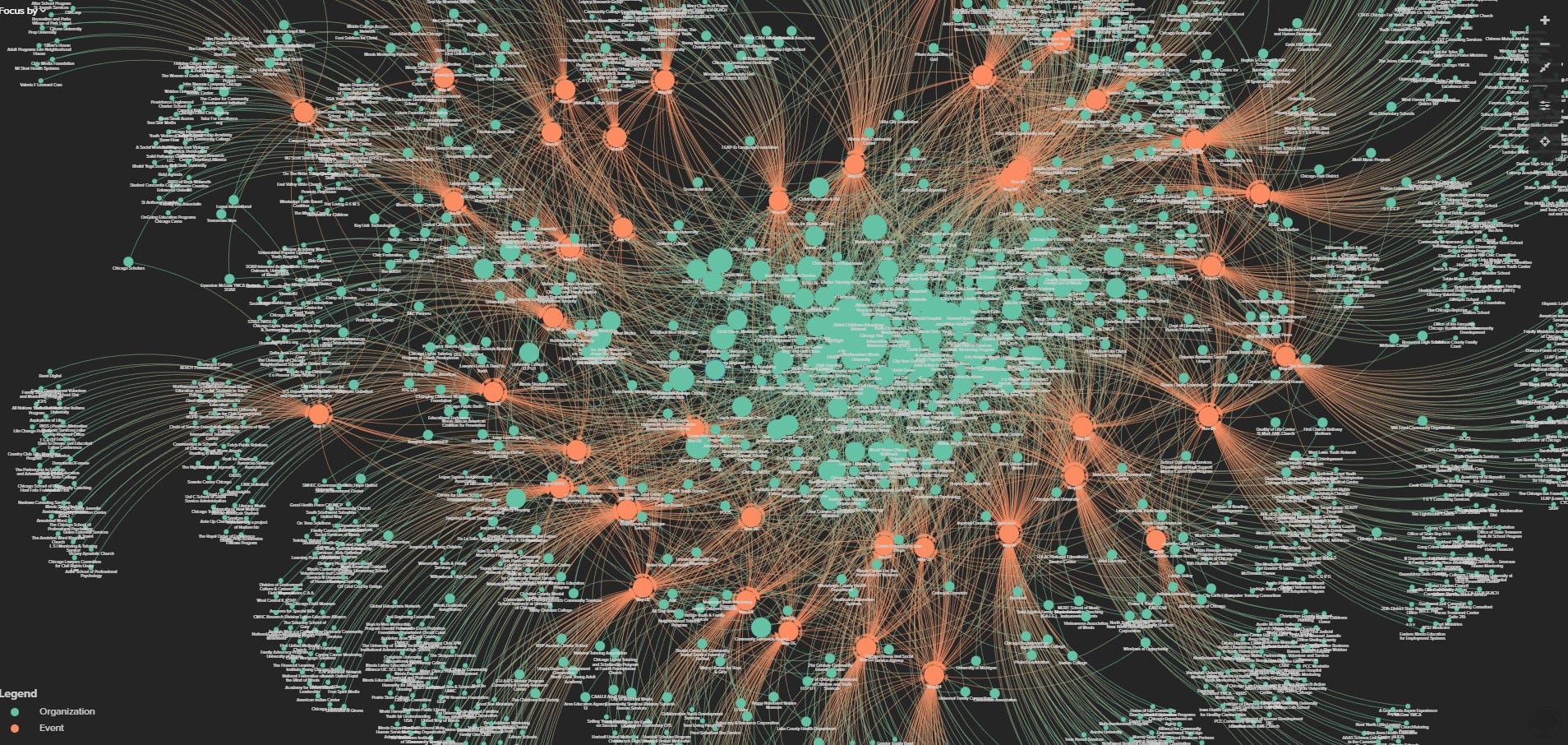
Read this set of articles to see how you can zoom into this map and look at individual conferences, and/or individual organizations. As you do you’ll see that this map is just a demonstration of how an open source tool they created can be used by anyone to collect and map data that helps them better understand who is participating in their events and who is missing. Read about that tool on this page.
I’ve been sharing my vision for mapping networks via blog articles written since the late 2000s. Here’s one from 2025. This is part of the information the IVMOOC teams used to create their own projects.
I created the http://tutormentorconnection.ning.com site in 2007 with the goal of drawing people together to share ideas and do the work needed to help volunteer-based tutor, mentor and learning programs reach more K-12 kids in more high poverty areas. While the site was visited often pre 2010 a change in management at Ning made it less visited. However, I used it to coach interns and volunteers on “sense-making” projects. Read the discussions posted in this group and this group to see how I’ve shared my vision and how interns helped.
I met Gene Bellinger on LinkedIn more than 15 years ago and many of my systems thinking ideas were inspired by his work. I encourage you to visit his Substack page and read his articles.
Thanks for reading. How have others helped you communicate your own vision for a better world? I hope you’ll share my posts and connect with me on LinkedIn, Facebook, BlueSky, Instagram, Mastodon and/or Twitter.
And, while I don’t charge a fee for people to read my articles I do appreciate it when someone visits this page and makes a contribution.